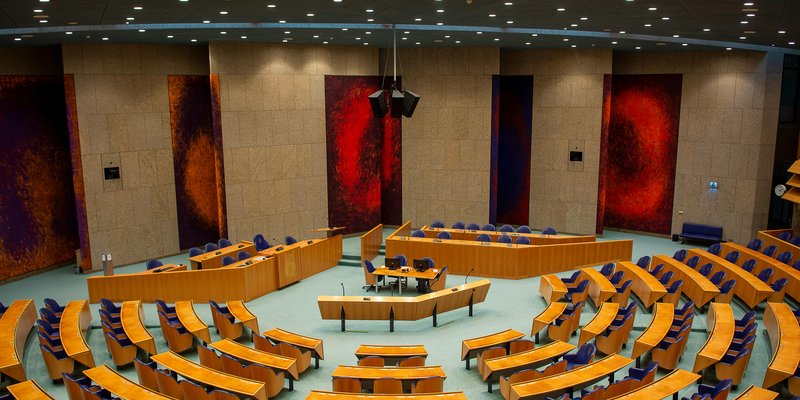

The Dutch House of Representatives passed the Cash Payments Act with an overwhelming majority: 123 out of 150 MPs voted in favour.
The Dutch House of Representatives passed the Cash Payments Act with an overwhelming majority: 123 out of 150 MPs voted in favour.
That number matters. Not because it is symbolic, but because it signals something increasingly rare across Europe: a parliament choosing to treat cash not as an afterthought, but as part of the country’s public infrastructure — something that must be protected, maintained, and made available to everyone.
Cash as a Public Service, Not a Private Option
The Act places a clear responsibility on banks: access to cash can no longer be left to market convenience or shrinking branch networks. Instead, banks must structurally safeguard cash availability and accessibility across the Netherlands.
That word — structurally — is doing real work here.
It means cash services cannot depend on whether a neighbourhood is profitable, whether footfall is high enough, or whether digital payments are considered “modern enough.” The law treats cash like a baseline public utility: present, dependable, and within reach.
No Fees for Simply Using Your Own Money
One of the most concrete outcomes is also one of the most human:
Consumers will not pay transaction fees for withdrawing or depositing banknotes.
This is a decision restores a principle: handling your own money should not come with a toll.
The Act also introduces capped tariffs for business users, recognising that shops, cafés, market traders, and small enterprises should not be priced out of accepting cash.
Keeping the Cash Network Alive Behind the Scenes
Cash does not appear by magic. It moves through a system — ATMs, transport, security, logistics.
That is why the Act introduces reporting obligations for larger cash-in-transit companies, helping ensure the continuity of CIT services across the country.
This is the unglamorous backbone of cash: the vehicles, vaults, routes, and workers who keep physical money circulating. Protecting cash means protecting that infrastructure too.
A Five-Kilometre Democratic Promise
A week before the final vote, Parliament adopted a key amendment: in principle, everyone should have access to cash services within five kilometres.
This is where legislation becomes geography.
A five-kilometre radius is not abstract. It is the distance an older person can manage, the limit of rural connectivity, the difference between inclusion and quiet exclusion. It turns cash access into something measurable — not rhetorical.
Law, in this sense, becomes a map.
From Voluntary Agreement to Legal Baseline
The Act also anchors the Cash Covenant, agreed voluntarily with industry stakeholders in April 2022, as the minimum baseline for the new legal framework.
That shift is significant. Voluntary commitments can dissolve when priorities change. A legal baseline cannot be so easily shrugged off.
The Dutch state is saying: cash access is not a favour. It is an obligation.
Europe Still Watching
One important element remains on pause: the cash acceptance obligation, already adopted in Dutch law, will only come into force once there is clarity on the forthcoming European regulation on legal tender.
This is the tension playing out across Europe: national protections moving forward, while EU-level frameworks are still being negotiated.
The Netherlands has chosen not to wait entirely — but it is also positioning itself within the larger European debate about what “legal tender” must mean in practice.
The Next Step: Turning Law Into Reality
The next milestone is the upcoming public consultation on the governmental decree that will define the minimum infrastructural requirements for cash services.
Because legislation is only the beginning.
What matters next is implementation: where ATMs remain, how services are distributed, how standards are enforced, and whether access is treated as a living promise rather than a one-time vote.
Yesterday’s decision was a landmark. Now comes the work of making it real on the ground.