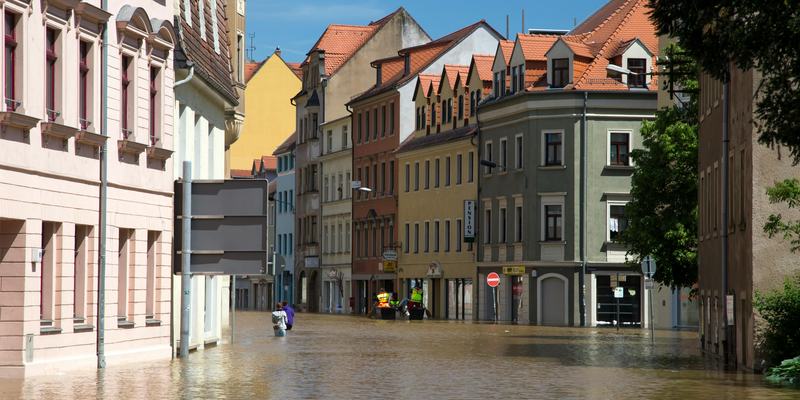

Crisis environments do not create new accessibility requirements for banknotes. They intensify existing ones. Floods, hurricanes, earthquakes, and large-scale evacuations all reduce access to power, connectivity, and financial institutions. In these situations, cash often becomes the fastest and most inclusive payment mechanism — but only if people can use it confidently under stress.
Real-world events illustrate this clearly. After major hurricanes in the United States, damaged communication networks frequently forced retailers and relief centres to revert to cash transactions. In these conditions, users had to identify denominations quickly in poor lighting, crowded spaces, and unfamiliar locations. Large numerals, predictable layouts, and strong contrast became critical — not as accessibility enhancements, but as basic usability requirements.
Similar patterns emerged after earthquakes in New Zealand and Japan. Temporary markets and aid distribution points relied heavily on cash because electronic systems were slow to recover. Familiar note appearance mattered. Designs that preserved visual continuity with previous series reduced hesitation and errors, especially among older users and those under cognitive strain. Accessibility in these cases depended as much on recognisability and consistency as on formal design features.
Crisis zones also amplify the importance of handling simplicity. People may be injured, fatigued, or rushed. Separating, counting, and confirming banknotes becomes harder when dexterity is reduced or attention is divided. Features that lower handling effort — such as clear denomination hierarchy and consistent layout zones — directly support independence. When these cues are missing or ambiguous, users are more likely to rely on third parties, slowing transactions and increasing the risk of error.
Another often overlooked factor is distribution and sorting under emergency conditions. Relief organisations frequently move large volumes of cash quickly through unfamiliar channels. Notes that are easy to sort and verify by sight and touch reduce bottlenecks in aid delivery. Accessibility in this context supports operational efficiency as much as individual usability.
What these examples show is that crisis accessibility is not about creating specialised emergency banknotes. It is about ensuring that everyday banknotes remain usable when assumptions fail. Stress, difficult environments, and unfamiliar settings expose weaknesses that often remain invisible in normal use.
Systems insight: Crisis conditions function as accelerated testing. Designs that hold up under stress reveal which accessibility features were truly structural rather than cosmetic.
“This post reflects my personal views and general industry observations only. They do not represent my employer’s positions and do not disclose any proprietary, confidential, or non-public information.”