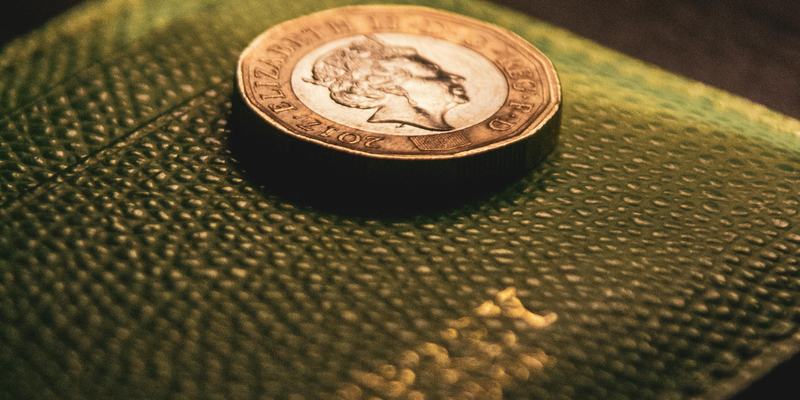

There is a noticeable change in how money is being handled across the UK — not in policy circles or banking halls, but in the routines of everyday life.
Increasingly, younger people are stepping away from cards and mobile payments and returning to cash, not out of sentiment, but as a practical response to rising costs.
A growing number are adopting what has become known as a “cash-only weekend”. The premise is straightforward: withdraw a fixed amount of money, use only that for discretionary spending, and stop when it runs out. No tapping for another round, no quiet extensions through overdrafts or credit. The boundary is set in advance — and held.
This shift is unfolding against the backdrop of a prolonged cost-of-living squeeze. Fuel prices remain volatile, grocery bills continue to climb, and small, routine purchases are placing increasing pressure on household budgets. Digital payments, once celebrated for their convenience, have begun to reveal a less visible consequence: they make spending effortless, and often, unnoticeable until it accumulates.
Cash operates differently. It introduces friction — not as an inconvenience, but as a form of awareness. The act of handing over notes, of watching what remains in a wallet, creates a tangible sense of limit. For many, this is precisely the point. It is not about rejecting technology, but about restoring a degree of control that feels increasingly absent in digital transactions.
There are other, less discussed advantages. Cash remains functional when payment systems fail — a concern not entirely theoretical, as central banks, including the European Central Bank, have advised citizens to keep a small reserve of physical money for emergencies. It also offers a level of privacy that digital payments, by design, do not. In an economy where transactions are routinely tracked, stored, and analysed, this distinction carries weight.
Yet, even as demand for cash finds new footing, the infrastructure supporting it continues to thin. ATMs are becoming less accessible, withdrawal fees are rising, and some retailers — particularly since the pandemic — have moved towards cashless operations. The contradiction is difficult to ignore: just as people begin to rely on cash as a budgeting tool, the system around them makes it harder to use.
It would be simplistic to frame this as a reversal of digital payments. Cards and apps remain deeply embedded in daily life, and for many transactions — particularly online — they are indispensable. What is emerging instead is a more deliberate balance. Cash is being used where control matters most: in day-to-day spending, where small decisions accumulate into financial strain.
What this moment reveals is less about preference and more about design. When money becomes too abstract, too easily spent, people look for ways to make it visible again. Cash, in its physical form, does precisely that. It sets a boundary not through software, but through presence — a limit that can be seen, counted, and, crucially, reached.
In that sense, its return is not a step backwards, but a recalibration — one shaped by economic pressure, and by a growing recognition that convenience, on its own, is not always a virtue.